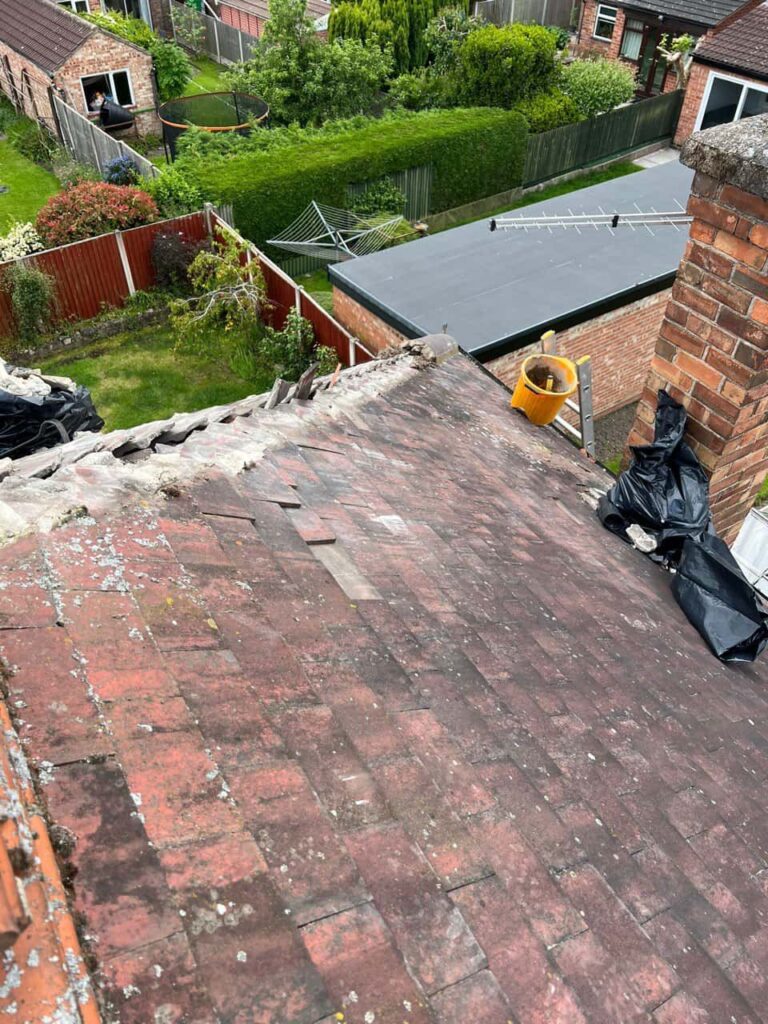
Roof leaks rarely occur at random. In most cases, water ingress starts at specific weak points where materials join, movement occurs, or weather exposure is greatest. For properties in Foots Cray, South East London, understanding these vulnerable areas can help homeowners recognise early warning signs and take action before minor issues escalate.
At Foots Cray Roofing Repairs, we regularly inspect roofs where leaks have followed predictable patterns linked to these high-risk areas.
The Most Common Leak-Prone Areas on a Roof
Roof Flashings and Leadwork
Flashings are installed where the roof meets vertical structures such as chimneys, walls, or roof extensions. Over time, leadwork can crack, lift, or separate due to weather exposure and natural movement of the building.
Even small gaps in flashing allow rainwater to track beneath the roof covering, making this one of the most frequent sources of leaks.
Chimney Stacks
Chimneys are exposed on all sides and are subject to constant weathering. Leaks often develop around the base of the chimney where flashing, mortar joints, and brickwork meet the roof surface.
Deterioration in any of these elements can allow water to penetrate the roof structure and travel internally before becoming visible.
Roof Valleys
Valleys are formed where two roof slopes meet, channelling large volumes of rainwater into a single area. Because they handle so much runoff, valleys are particularly vulnerable if debris builds up or the lining becomes damaged.
Any defect in a valley can quickly result in leaks, especially during heavy or prolonged rainfall.
Areas Affected by Wear and Weather Exposure
Ridge and Hip Tiles
Ridge and hip tiles sit along the highest points of the roof and are constantly exposed to wind and rain. Over time, the bedding or fixings that hold them in place can weaken.
Once movement occurs, water can enter through small gaps beneath the tiles, leading to gradual but persistent leaks.
Roof Tiles and Slates
Individual tiles or slates can crack, slip, or become dislodged due to age or weather stress. While a single damaged tile may seem minor, it can allow water to bypass the roof covering and soak into the layers below.
Leaks caused by tile damage often spread before they are noticed indoors.
Roof Edges and Eaves
The eaves are where the roof meets the guttering system. Poor drainage, blockages, or worn underlay at the roof edge can allow water to back up beneath the tiles.
This area is especially prone to leaks during heavy rain when water flow is at its highest.
Why Leaks Often Appear Away from the Actual Problem
Water Tracking Within the Roof Structure
Water does not always enter the building directly below the damaged area. It can travel along timbers, underlay, or insulation before emerging elsewhere.
This makes professional inspection essential, as the visible leak may not align with the original point of entry.
Delayed Internal Signs
Roof leaks can develop slowly, with moisture building up over time. Stains or damp patches inside the property often appear well after the initial damage has occurred.
Early assessment helps identify vulnerabilities before internal damage becomes apparent.
The Importance of Professional Roof Inspections
Identifying Hidden Weak Points
A professional inspection looks beyond obvious damage to assess joints, fixings, and concealed areas. This ensures that underlying causes are addressed rather than just visible symptoms.
Preventing Recurring Issues
Targeted repairs based on a thorough inspection help prevent repeated leaks, improving the overall reliability of the roof.
Conclusion
The areas most prone to roof leaks include flashings, chimneys, valleys, ridges, roof edges, and individual tiles. These locations experience the greatest stress from weather, water flow, and natural movement. Understanding where leaks commonly occur highlights the importance of early detection and professional assessment.
If you are concerned about a potential roof leak, Foots Cray Roofing Repairs provide expert inspections and reliable repairs throughout Foots Cray, South East London. Our experienced team can identify vulnerable areas, resolve underlying issues, and help keep your roof watertight and dependable. Contact us today to arrange professional roofing support.
Call us on: 0208 059 2692
Click here to find out more about Foots Cray Roofing Repairs
Click here to complete our contact form and see how we can help with your roofing needs.